
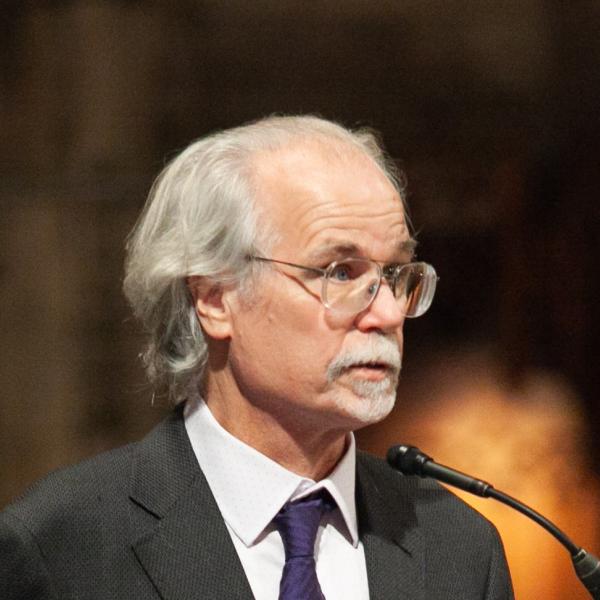
Bart Schultz is Senior Lecturer in Humanities (Philosophy) and Director of the Office of Civic Engagement's Civic Knowledge Project. He has been teaching in the College at the University of Chicago since 1987, designing a wide range of core courses as well as new courses on Philosophy and Public Education, The Philosophy of Poverty, John Dewey, The Chicago School of Philosophy, Political Philosophy, Philosophies of Environmentalism and Sustainability, Philosophy and Philanthropy, Consequentialism from Bentham to Singer, and Happiness. He has also published widely in philosophy, and his books include Essays on Henry Sidgwick (Cambridge, 1992); Henry Sidgwick: Eye of the Universe (Cambridge, 2004), winner of the American Philosophical Society's Jacques Barzun Prize in Cultural History); Utilitarianism and Empire (Lexington, 2005); and The Happiness Philosophers: The Lives and Works of the Great Utilitarians (Princeton, 2017). He is on the Editorial Board of Utilitas, the leading professional journal of utilitarian studies, and he is currently working on a new book, The Classical Utilitarians: Essential Readings (Broadview Press, forthcoming). Through the Civic Knowledge Project (CKP), he has developed a number of public ethics programs affording rich opportunities for UChicago students, staff, and faculty to get involved in educationally relevant ways with the larger South Side community. In 2017, he launched the CKP's MLK Initiative, an extensive and ongoing set of programs commemorating and advancing the legacy of Dr. Martin Luther King Jr., and he has for many years worked closely with Prof. Timuel D. Black, the civil rights activist, educator and oral historian who worked with Dr. King to help organize the 1963 March on Washington. He edited Prof. Black's memoir, Sacred Ground: The Chicago Streets of Timuel Black (Northwestern, 2019), and has been instrumental in establishing a Timuel Black Legacy Endowment at UChicago (2020). He also served as a founding member of the Board of Directors of PLATO (Philosophy Learning and Teaching Organization), the main professional group in the United States promoting precollege philosophy, and he won the 2013 PUSHExcel Excellence in Teaching Award from the RainbowPUSH Coalition. The CKP is particularly involved in designing diverse and inclusive philosophy programs for disadvantaged adults and for underserved public elementary and middle school students in the neighborhoods near the University of Chicago, and its Winning Words precollegiate philosophy program won the 2012 American Philosophical Association's PDC Prize for Excellence and Innovation in Philosophy Programs.
Selected Publications
Tommie Shelby and Brandon M. Terry (eds.), To Shape a New World: Essays on the Political Philosophy of Martin Luther King, Jr. (Cambridge, MA: The Belknap Press of Harvard University Press, 2018), pp. 464. Link
Editor, Sacred Ground: The Chicago Streets of Timuel Black. With Susan Klonsky. (Evanston: Northwestern University Press, 2018)
“Not Eye to Eye: A Comment on the Commentaries,” Etica & Politica, published online July 24, 2018.
Review of Katarzyna de Lazari-Radek and Peter Singer, Utilitarianism: A Very Short Introduction. Utilitas, published online 19 February 2018.
The Happiness Philosophers: The Lives and Works of the Great Utilitarians (Princeton, NJ: Princeton University Press, 2017)
Editor, Book Symposium on Katarzyna de Lazari-Radek and Peter Singer, The Point of View of the Universe: Sidgwick and Contemporary Ethics. With original contributions by Roger Crisp, Brad Hooker, Derek Parfit, and Mariko Nakano, and replies by Katarzyna de Lazari-Radek and Peter Singer. Etica & Politica, Vol. XVIII, No. 1 (Trieste: University of Trieste, April 2016).
“The New Chicago School of Philosophy.” Rounded Globe, November 15, 2015.
Henry Sidgwick, Eye of the Universe: An Intellectual Biography (New York: Cambridge University Press, 2004). Winner of the American Philosophical Society’s Jacques Barzun Prize in Cultural History for 2004.
“Henry Sidgwick.” Entry in the Stanford Encyclopedia of Philosophy (electronic text), edited by Edward Zalta (October 5, 2004). Substantively revised and updated, 2011 and 2015.
Editor/Contributor, with P. Bucolo and R. Crisp, Proceedings of the World Congress--University of Catania on H. Sidgwick: Happiness and Religion (Catania: Universita degli Studi di Catania, 2007)
Editor/Contributor, with G. Varouxakis, Utilitarianism and Empire (Lanham, MD: Lexington Books, 2005)
General Editor, The Complete Works and Select Correspondence of Henry Sidgwick (Charlottesville, VA: Past Masters Series, InteLex Corporation, 1997, 2nd ed. 1999)
Recent Courses
PHIL 21499 Philosophy and Philanthropy
Perhaps it is better to give than to receive, but exactly how much giving ought one to engage in and to whom or what? Recent ethical and philosophical developments such as the effective altruism movement suggest that relatively affluent individuals are ethically bound to donate a very large percentage of their resources to worthy causes—for example, saving as many lives as they possibly can, wherever in the world those lives may be. And charitable giving or philanthropy is not only a matter of individual giving, but also of giving by foundations, corporations, non-profits, non-governmental and various governmental agencies, and other organizational entities that play a very significant role in the modern world. How, for example, does an institution like the University of Chicago engage in and justify its philanthropic activities? Can one generalize about the various rationales for philanthropy, whether individual or institutional? Why do individuals or organizations engage in philanthropy, and do they do so well or badly, for good reasons, bad reasons, or no coherent reasons?
This course will afford a broad, critical philosophical and historical overview of philanthropy, examining its various contexts and justifications, and contrasting charitable giving with other ethical demands, particularly the demands of justice. How do charity and justice relate to each other? Would charity even be needed in a fully just world? And does philanthropy in its current forms aid or hinder the pursuit of social justice, in both local and global contexts? This course will feature a number of guest speakers and be developed in active conversation with the work of the UChicago Civic Knowledge Project and Office of Civic Engagement. Students will also be presented with some practical opportunities to engage reflectively in deciding whether, why and how to donate a certain limited amount of (course provided) funding. (A)
PHIL 21207 Ecocentrism and Environmental Racism
The aim of this course is to explore the tensions and convergences between two of the most profoundly important areas of environmental philosophy. "Ecocentrism" is the view that holistic systems such as ecosystems can be ethically considerable or "count" in a way somewhat comparable to human persons, and such a philosophical perspective has been shared by many prominent forms of environmentalism, from Aldo Leopold's Land Ethic to Deep Ecology to the worldviews of many Native American and Indigenous peoples. For some prominent environmental philosophers, a commitment to ecocentrism is the defining test of whether one is truly an environmental philosopher. "Environmental Racism" is one of the defining elements of environmental injustice, the way in which environmental crises and existential threats often reflect systemic discrimination, oppression, and domination in their disproportionate adverse impact on peoples of color, women, the global poor, LGBTQ populations, and Indigenous Peoples. Although historically, some have claimed that ecocentric organizations such as Greenpeace have neglected the problems of environmental injustice and racism in their quest to, e.g., "save the whales," a deeper analysis reveals a far more complicated picture, with many affinities and alliances between ecocentrists and activists seeking environmental justice. (A)
PHIL 21207 Ecocentrism and Environmental Racism
The aim of this course is to explore the tensions and convergences between two of the most profoundly important areas of environmental philosophy. "Ecocentrism" is the view that holistic systems such as ecosystems can be ethically considerable or "count" in a way somewhat comparable to human persons, and such a philosophical perspective has been shared by many prominent forms of environmentalism, from Aldo Leopold's Land Ethic to Deep Ecology to the worldviews of many Native American and Indigenous peoples. For some prominent environmental philosophers, a commitment to ecocentrism is the defining test of whether one is truly an environmental philosopher. "Environmental Racism" is one of the defining elements of environmental injustice, the way in which environmental crises and existential threats often reflect systemic discrimination, oppression, and domination in their disproportionate adverse impact on peoples of color, women, the global poor, LGBTQ populations, and Indigenous Peoples. Although historically, some have claimed that ecocentric organizations such as Greenpeace have neglected the problems of environmental injustice and racism in their quest to, e.g., "save the whales," a deeper analysis reveals a far more complicated picture, with many affinities and alliances between ecocentrists and activists seeking environmental justice. (A)
PHIL 21499 Philosophy and Philanthropy
Perhaps it is better to give than to receive, but exactly how much giving ought one to engage in and to whom or what? Recent ethical and philosophical developments such as the effective altruism movement suggest that relatively affluent individuals are ethically bound to donate a very large percentage of their resources to worthy causes—for example, saving as many lives as they possibly can, wherever in the world those lives may be. And charitable giving or philanthropy is not only a matter of individual giving, but also of giving by foundations, corporations, non-profits, non-governmental and various governmental agencies, and other organizational entities that play a very significant role in the modern world. How, for example, does an institution like the University of Chicago engage in and justify its philanthropic activities? Can one generalize about the various rationales for philanthropy, whether individual or institutional? Why do individuals or organizations engage in philanthropy, and do they do so well or badly, for good reasons, bad reasons, or no coherent reasons?
This course will afford a broad, critical philosophical and historical overview of philanthropy, examining its various contexts and justifications, and contrasting charitable giving with other ethical demands, particularly the demands of justice. How do charity and justice relate to each other? Would charity even be needed in a fully just world? And does philanthropy in its current forms aid or hinder the pursuit of social justice, in both local and global contexts? This course will feature a number of guest speakers and be developed in active conversation with the work of the UChicago Civic Knowledge Project and Office of Civic Engagement. Students will also be presented with some practical opportunities to engage reflectively in deciding whether, why and how to donate a certain limited amount of (course provided) funding. (A)
PHIL 22819 Philosophy of Education
What are the aims of education? Are they what they should be, for purposes of cultivating flourishing citizens of a liberal democracy? What are the biggest challenges—philosophical, political, cultural, and ethical—confronting educators today, in the U.S. and across the globe? How can philosophy help address these? In dealing with such questions, this course will provide an introductory overview of both the philosophy of education and various educational programs in philosophy, critically surveying a few of the leading ways in which philosophers past and present have framed the aims of education and the educational significance of philosophy. From Plato to the present, philosophers have contributed to articulating the aims of education and developing curricula to be used in various educational contexts, for diverse groups and educational levels. This course will draw on both classic and contemporary works, but considerable attention will be devoted to the work and legacy of philosopher/educator John Dewey, a founding figure at the University of Chicago and a crucial resource for educators concerned with cultivating critical thinking, creativity, character, and ethical reflection. The course will also feature field trips, distinguished guest speakers, and opportunities for experiential learning. (A)
PHIL 21512 Practical Anarchism
The history of anarchism, or cooperative politics without leaders, is itself anarchic, coming in a rich diversity of forms and contexts. But from Bakunin’s anarchist critique of Marx and Kropotkin’s re-reading of evolutionary cooperation, through the Haymarket martyrs, Voltairine de Cleyre, Emma Goldman, and Helen Keller, down to Colin Ward, Bertrand Russell, Noam Chomsky, Ursula La Guin, and David Graeber, anarchism has repeatedly generated electrifying forms of political critique and mobilization, with political and ethical imaginaries that proved visionary. This course will explore the rich legacy of anarchist movements and philosophies, emphasizing how relevant they are to addressing the global political crises of the world today, particularly in the form of Green and Eco-anarchism, crucial forces in the movements for environmental justice and animal liberation. (A)
PHIL 21008/31008 The Philosophy of Civic Engagement
What is “civic engagement” and why should colleges, universities, and other educational institutions practice and encourage it? How, for example, does the University of Chicago’s Office of Civic Engagement define the theory and practice of civic engagement, fitting it within the University’s core mission and valorizing certain approaches to it for students, faculty, staff, and the University as a whole? What alternative models might be available? And what are the limitations of such institutionalized efforts, as highlighted in efforts to “decolonize” institutions of higher education? When, in short, does such institutionalized civic engagement conflict with efforts to move beyond the discourses of diversity and civic education to embrace more critical perspectives on the settler colonial ideologies informing educational institutions in current neoliberal societies? This course will be developed in active collaboration with the UChicago Civic Knowledge Project, which for two decades has explored alternatives visions of civic friendship on Chicago’s South Side. (A) (I) (IV)
PHIL 21207 Ecocentrism and Environmental Racism
The aim of this course is to explore the tensions and convergences between two of the most profoundly important areas of environmental philosophy. "Ecocentrism" is the view that holistic systems such as ecosystems can be ethically considerable or "count" in a way somewhat comparable to human persons, and such a philosophical perspective has been shared by many prominent forms of environmentalism, from Aldo Leopold's Land Ethic to Deep Ecology to the worldviews of many Native American and Indigenous peoples. For some prominent environmental philosophers, a commitment to ecocentrism is the defining test of whether one is truly an environmental philosopher. "Environmental Racism" is one of the defining elements of environmental injustice, the way in which environmental crises and existential threats often reflect systemic discrimination, oppression, and domination in their disproportionate adverse impact on peoples of color, women, the global poor, LGBTQ populations, and Indigenous Peoples. Although historically, some have claimed that ecocentric organizations such as Greenpeace have neglected the problems of environmental injustice and racism in their quest to, e.g., "save the whales," a deeper analysis reveals a far more complicated picture, with many affinities and alliances between ecocentrists and activists seeking environmental justice. (A)
PHIL 21499 Philosophy and Philanthropy
Perhaps it is better to give than to receive, but exactly how much giving ought one to engage in and to whom or what? Recent ethical and philosophical developments such as the effective altruism movement suggest that relatively affluent individuals are ethically bound to donate a very large percentage of their resources to worthy causes—for example, saving as many lives as they possibly can, wherever in the world those lives may be. And charitable giving or philanthropy is not only a matter of individual giving, but also of giving by foundations, corporations, non-profits, non-governmental and various governmental agencies, and other organizational entities that play a very significant role in the modern world. How, for example, does an institution like the University of Chicago engage in and justify its philanthropic activities? Can one generalize about the various rationales for philanthropy, whether individual or institutional? Why do individuals or organizations engage in philanthropy, and do they do so well or badly, for good reasons, bad reasons, or no coherent reasons?
This course will afford a broad, critical philosophical and historical overview of philanthropy, examining its various contexts and justifications, and contrasting charitable giving with other ethical demands, particularly the demands of justice. How do charity and justice relate to each other? Would charity even be needed in a fully just world? And does philanthropy in its current forms aid or hinder the pursuit of social justice, in both local and global contexts? This course will feature a number of guest speakers and be developed in active conversation with the work of the UChicago Civic Knowledge Project and Office of Civic Engagement. Students will also be presented with some practical opportunities to engage reflectively in deciding whether, why and how to donate a certain limited amount of (course provided) funding. (A)
PHIL 21400 Happiness
From Plato to the present, notions of happiness have been at the core of heated debates in ethics and politics. What is happiness? Is it subjective or objective? Is it a matter of pleasure or enjoyment? Of getting what one most wants? Of flourishing through the development of one’s human capabilities? Of being satisfied with how one’s life is going overall? Is happiness the ultimate good for human beings, the essence of the good life and tied up with virtue, or is morality somehow prior to it? Can it be achieved by all, or only by a fortunate few? Can it be measured, and perhaps made the basis of a science? Should it be the aim of education? What causes happiness? Does the wrong notion of happiness lend itself to a politics of manipulation and surveillance? What critical perspectives pose the deepest challenges to the idea that happiness matters? These are some of the questions that this course addresses, with the help of both classic and contemporary texts from philosophy, literature, and the social sciences. The approach will involve a lot of more or less Socratic questioning, which may or may not contribute your personal happiness. (A)
PHIL 21207 Ecocentrism and Environmental Racism
The aim of this course is to explore the tensions and convergences between two of the most profoundly important areas of environmental philosophy. “Ecocentrism” is the view that holistic systems such as ecosystems can be ethically considerable or “count” in a way somewhat comparable to human persons, and such a philosophical perspective has been shared by many prominent forms of environmentalism, from Aldo Leopold’s Land Ethic to Deep Ecology to the worldviews of many Native American and Indigenous peoples. For some prominent environmental philosophers, a commitment to ecocentrism is the defining test of whether one is truly an environmental philosopher. “Environmental Racism” is one of the defining elements of environmental injustice, the way in which environmental crises and existential threats often reflect systemic discrimination, oppression, and domination in their disproportionate adverse impact on peoples of color, women, the global poor, LGBTQ populations, and Indigenous Peoples. Although historically, some have claimed that ecocentric organizations such as Greenpeace have neglected the problems of environmental injustice and racism in their quest to, e.g., “save the whales,” a deeper analysis reveals a far more complicated picture, with many affinities and alliances between ecocentrists and activists seeking environmental justice. (A)
For full list of Bart Schultz's courses back to the 2012-13 academic year, see our searchable course database.